Smart Farming Drones: How Aerial Tech is Changing the Way We Work the Land
From the Cab to the Sky: A New View of the Farm
I remember the first time I walked a field with a drone controller in my hand instead of a soil probe. It was a damp morning in Norfolk, and the crop was struggling in patches. From the ground, the problem was hard to read. A few yellowing rows here, a thin stand there. But from forty metres up, the whole story unfolded. The variability across that one field was striking. That is the moment you understand what smart farming drones bring to the table. They do not just take pictures. They turn a farm into a map of information, and that map changes every decision you make.
For years, precision agriculture meant tractor-mounted sensors and satellite imagery that arrived days after you needed it. Drones changed the timing. Now you can fly a field in the morning, process the data by lunch, and have a variable rate application plan ready for the sprayer or spreader by the afternoon. That speed is not a luxury. In the middle of a wet spring or a sudden pest outbreak, it is the difference between saving a crop and watching it slip away.
What Makes a Drone a Farm Tool, Not a Toy
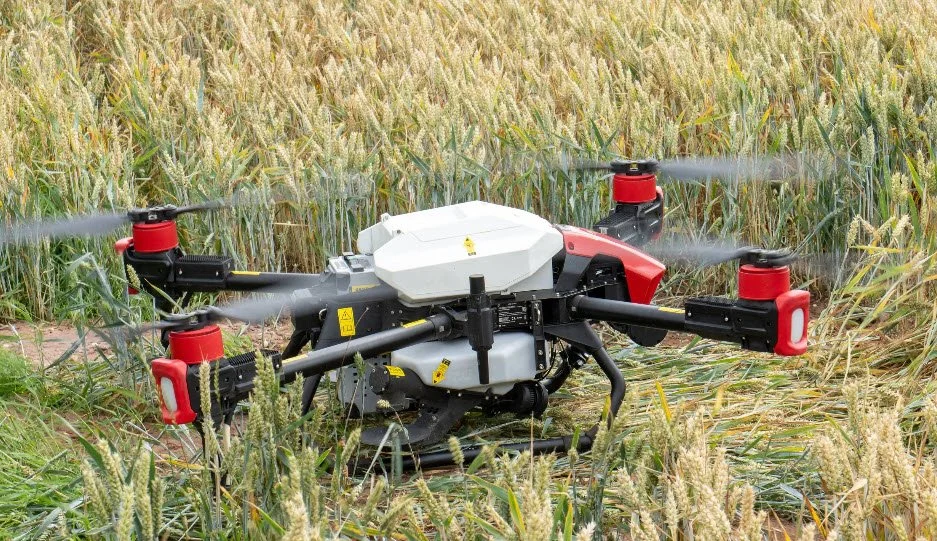
The drones that matter in agriculture are not the ones you buy at a electronics store. They are built to carry weight, withstand wind, and fly precise patterns over rough terrain. Platforms like the DJI Agras and XAG systems are purpose-built for fieldwork. They come with dedicated flight planning software, so you can draw a field boundary on a tablet and the aircraft does the rest. The software handles overlap, altitude, and speed, which are critical for even coverage.
There are two main jobs these machines do. The first is sensing. A drone equipped with a multispectral camera can capture NDVI imagery, which highlights plant health by measuring how foliage reflects light. Stressed plants look different from healthy ones, and the difference shows up weeks before you can see it with the naked eye. The second job is application. A drone sprayer can deliver crop protection products with surprising accuracy, while a granular spreader handles fertiliser and seed. Both jobs rely on the same core idea: put the right input in the right place, at the right rate, at the right time.
That is where the phrase smart farming drones fits. It is not about the hardware alone. It is about how the aircraft connect to the broader system of precision agriculture. GPS guides the flight, GIS layers the data, and the resulting maps drive the application. The drone is the tool, but the intelligence is in the workflow.
The Practical Payoff: Where the Savings Actually Show Up
People often ask me if drones are worth the investment. The honest answer is that it depends on your operation, but the numbers are convincing when you look at the details. Take variable rate application. Instead of spreading a uniform rate of fertiliser across a field, you adjust the rate based on the NDVI map. In one trial I followed on a Yorkshire farm, the grower cut nitrogen use by twelve percent while maintaining yield. That is not a huge headline number, but on a thousand hectares it pays for the drone service several times over.
There is also the matter of timing. A drone can fly in conditions that would keep a tractor out of the field. After heavy rain, when the ground is too soft for wheels, a drone sprayer can still go to work. That window of opportunity is often narrow, especially for fungicide applications. Missing it by even a few days can cost more than the drone service itself.
For seed sowing, drones open up places that were previously impractical. In steep vineyards, on wet ground, or in small paddocks where a large seeder cannot turn, a drone can sow cover crops or even main crops with decent precision. I have seen it done on a hill in the Peak District where the farmer used to hand-broadcast seed. The drone gave him a more even stand, and he did not have to walk the slope at all.
Regulation, Safety, and the Human Factor
None of this happens in a regulatory vacuum. In the UK, Defra sets the rules for drone use, and the Civil Aviation Authority enforces them. If you are flying a drone for commercial agricultural work, you need the right permissions, and the rules are tighter than they used to be. That is a good thing. I have seen what happens when people skip the basics. A drone flying near a road or a house is not just a nuisance. It is a liability.
The National Farmers' Union has been vocal about the need for clear guidance, and they have a point. Farmers do not want a pile of paperwork. They want to know what they can do legally, and how to do it safely. The good news is that the training and certification process is straightforward. Once you are set up, the operational side becomes routine.
There is also the question of skill. Flying a drone is easy. Flying one well, in a way that produces reliable data and even coverage, takes practice. I have spent hours calibrating sensors and adjusting flight paths. The learning curve is real, but it is not steep enough to put off a competent farmer or agronomist. Many growers start with a basic mapping drone, then move up to a spraying model once they see the value.
Choosing the Right Machine for the Job
The market has matured, and you no longer have to settle for a single-purpose device. The DJI Agras series has become the default for many contractors, and for good reason. It is reliable, easy to maintain, and the spray system is well designed. The XAG models offer strong competition, especially for users who want more integration with field data. On the sensing side, SenseFly and Parrot make excellent fixed-wing and multirotor platforms that are ideal for mapping large areas quickly.
But the brand matters less than the fit. A fruit grower with a ten-hectare orchard will need a different setup than a combinable crop farmer with five hundred hectares. A sprayer drone with a ten-litre tank is fine for a small vineyard, but it would be hopeless for large arable fields. That is where a service provider comes in. A company that offers drone spreading and spraying can match the equipment to the job, and they carry the liability and the expertise.
I have worked with contractors who use drones for everything from slug control to cover crop seeding. They all say the same thing: the drone is not a replacement for the tractor. It is another tool in the shed. Used well, it reduces passes, saves inputs, and gives you data you cannot get any other way.
The Wider Picture: Drones in the Farm System
Smart farming drones do not work in isolation. They are part of a chain that starts with soil sampling and ends with yield monitoring. The NDVI maps feed into a Geographic Information System, which layers historical data, soil types, and drainage patterns. That combined picture drives the variable rate application, whether it is for fertiliser, seed, or crop protection products. The drone is the delivery mechanism, but the intelligence comes from the analysis.
That is why the term smart farming drones is accurate. The aircraft themselves are not smart in the way a computer is. They are precise, but the smart part is the system they plug into. It is the combination of GPS, remote sensing, and software that turns a flight into a decision. When I talk to farmers about adopting this technology, I always emphasise the workflow, not the hardware. Buy the drone, sure, but plan the data pipeline first. Otherwise you end up with a very expensive camera that takes pretty pictures and nothing else.
Looking Ahead: What the Next Few Years Will Bring
The technology is moving fast. Battery life is improving, sensors are getting smaller, and the software is becoming more intuitive. I expect to see more autonomy, where a drone can take off, fly a field, and land without constant human input. That will make the economics even more attractive for smaller farms. It will also push the industry toward more professional standards, which benefits everyone.
There are still challenges. Weather is the biggest one. A sudden gust can ruin a spray run, and rain can ground a mapping flight for days. But the same is true for tractors, and farmers are used to working around the weather. The other challenge is cost. Good drones are not cheap, and the sensors and software add up. That is why many growers choose to hire a service rather than buy their own. It makes sense for the occasional job, and it gives you access to higher-end equipment without the capital outlay.
At the end of the day, smart farming drones are another step in the long history of agricultural innovation. They will not replace the farmer's eye or the feel for the land. But they will make that eye sharper and that feel better informed. And in a business where margins are thin and seasons are short, that is a difference worth taking seriously.